Examples
The examples use a provenance chain created according to the Common Provenance Model (CPM) and annotated with types from the Provenance of Biological Material Ontology (PBM-O) and the Provenance of Data Generation Ontology (PDG-O), which correspond to ISO 23494-3 and ISO 23494-4, respectively. The examples show the general use of the model, with queries specific to these two ontologies.
Traversal of the provenance chain
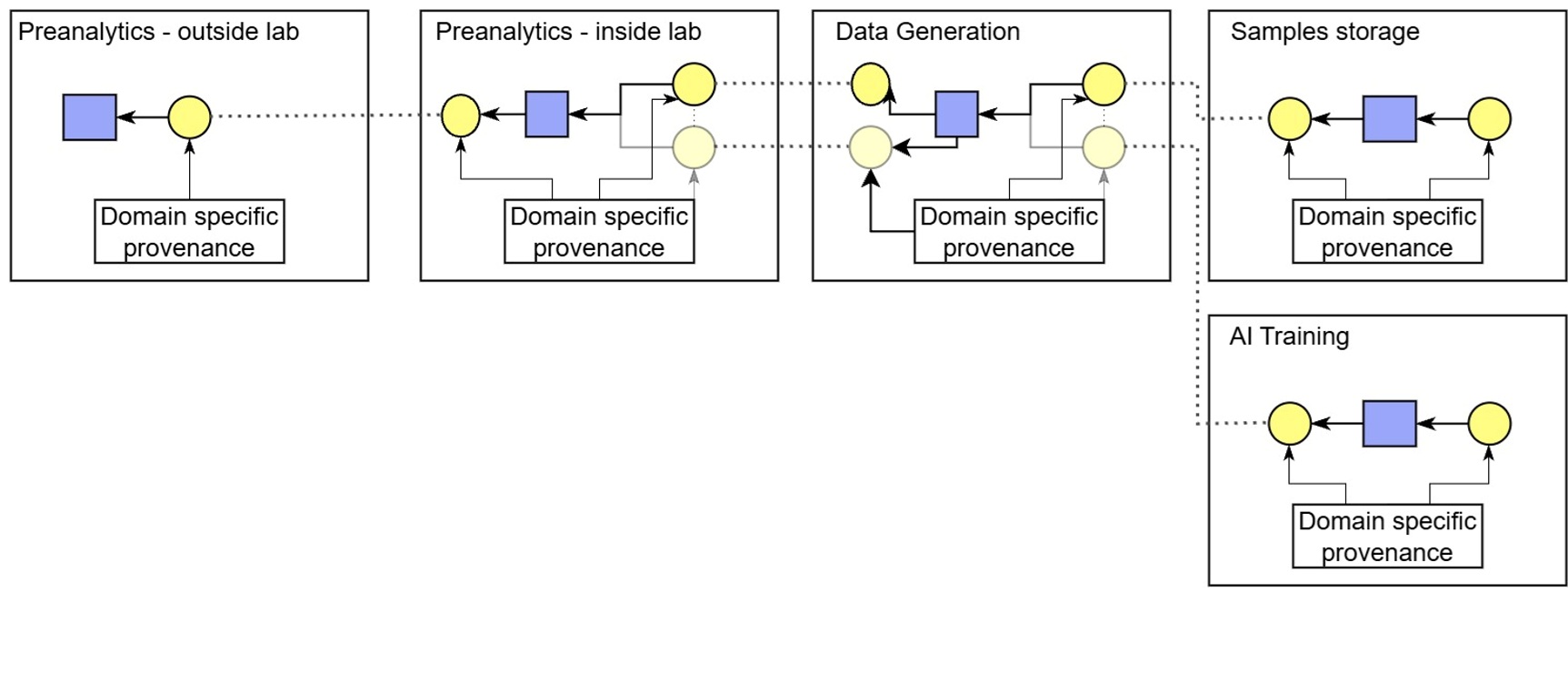
A user accesses the provenance chain (Figure 1) at an entry point. A generic traversal algorithm searches the traversal information of the provenance components for the relevant attributes. Once the relevant attribute is found, the traversal continues to the domain-specific part of the component, where domain-specific extensions or configurations apply.
Query related to sample acquisition
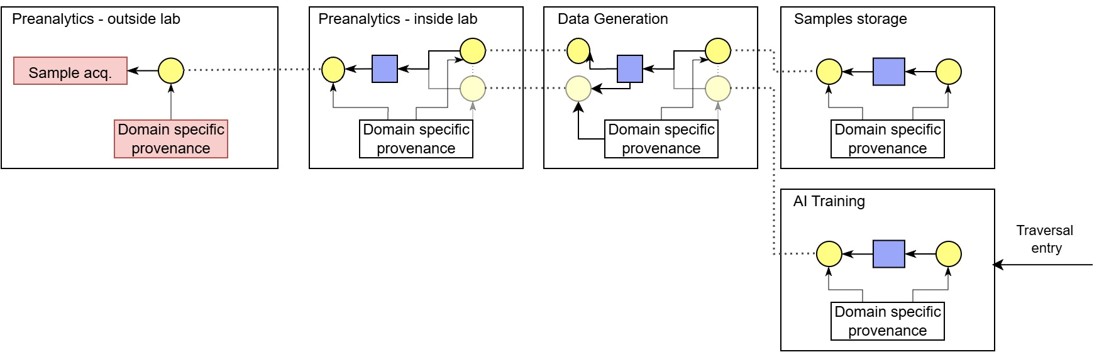
Figure 2 shows a query related to sample acquisition. The traversal starts at the entry point in the
AI Training component and follows the provenance chain to the Preanalytics - outside lab component, in which the
sample acquisition (pbm:Acquisition) and its domain-specific provenance are found.
Query related to data generation
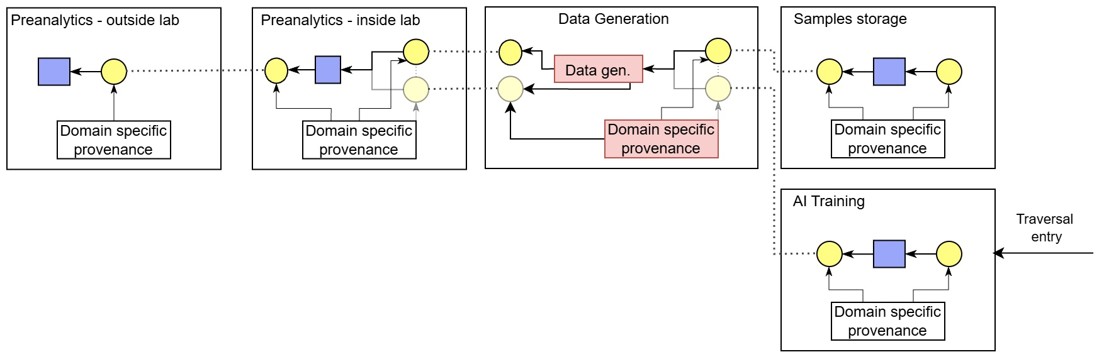
Figure 3 shows a query related to data generation. The traversal starts at the same entry point and
follows the provenance chain to the Data Generation component, in which the data generation
(pdg:DataGeneration) and its domain-specific provenance are found.
Further extensions specific to a domain, to a stage of the sample or data life cycle, or to a scenario are expected.